Lahaye Plumbing: 7 Signs Your Water Heater May Need Repair or Replacement Most homeowners don’t think much about their water heater until

A kitchen sink that suddenly stops draining can bring meal preparation and cleanup to a halt.
Sometimes the warning signs begin days or weeks earlier. Water takes a little longer to drain. You hear gurgling from the sink. An unpleasant smell appears around the drain. Eventually, you turn on the faucet and discover that the water isn’t going anywhere.
If your kitchen sink is backing up, there is usually a reason. Finding the cause is more important than repeatedly trying temporary solutions.
Kitchen drains handle more than water.
Small amounts of food, grease, soap, oils, and other debris can enter the plumbing during normal kitchen use. Over time, materials may accumulate inside the drainage system and restrict water flow.
Common causes include:
The location and severity of the blockage determine how the sink behaves.
Pouring liquid grease down the drain may seem harmless because it disappears immediately.
The problem occurs after it cools.
Grease and fats can stick to the inside of drain piping. Additional food particles and debris may then collect on that material, gradually restricting the pipe.
Instead of treating your kitchen drain like a wastebasket, avoid sending large quantities of grease, oil, coffee grounds, food scraps, and other problematic materials through it.
Even a garbage disposal doesn’t make every type of food safe for your plumbing.
A slow drain can be the beginning of a larger blockage.
Water should normally leave the sink without collecting for extended periods. If drainage is becoming progressively slower, buildup may already be restricting the pipe.
You might also notice gurgling sounds or unpleasant odors coming from the drain.
Addressing the issue while the sink still drains may be easier than waiting until the pipe becomes completely blocked.
Because the garbage disposal connects directly to the kitchen drainage system, a problem with the disposal can affect how the sink drains.
A disposal may become jammed, clogged, or stop operating correctly.
Warning signs include:
Never put your hand inside a garbage disposal to investigate a problem.
If the disposal and sink aren’t functioning normally, a plumber can inspect both the appliance connections and drainage system.
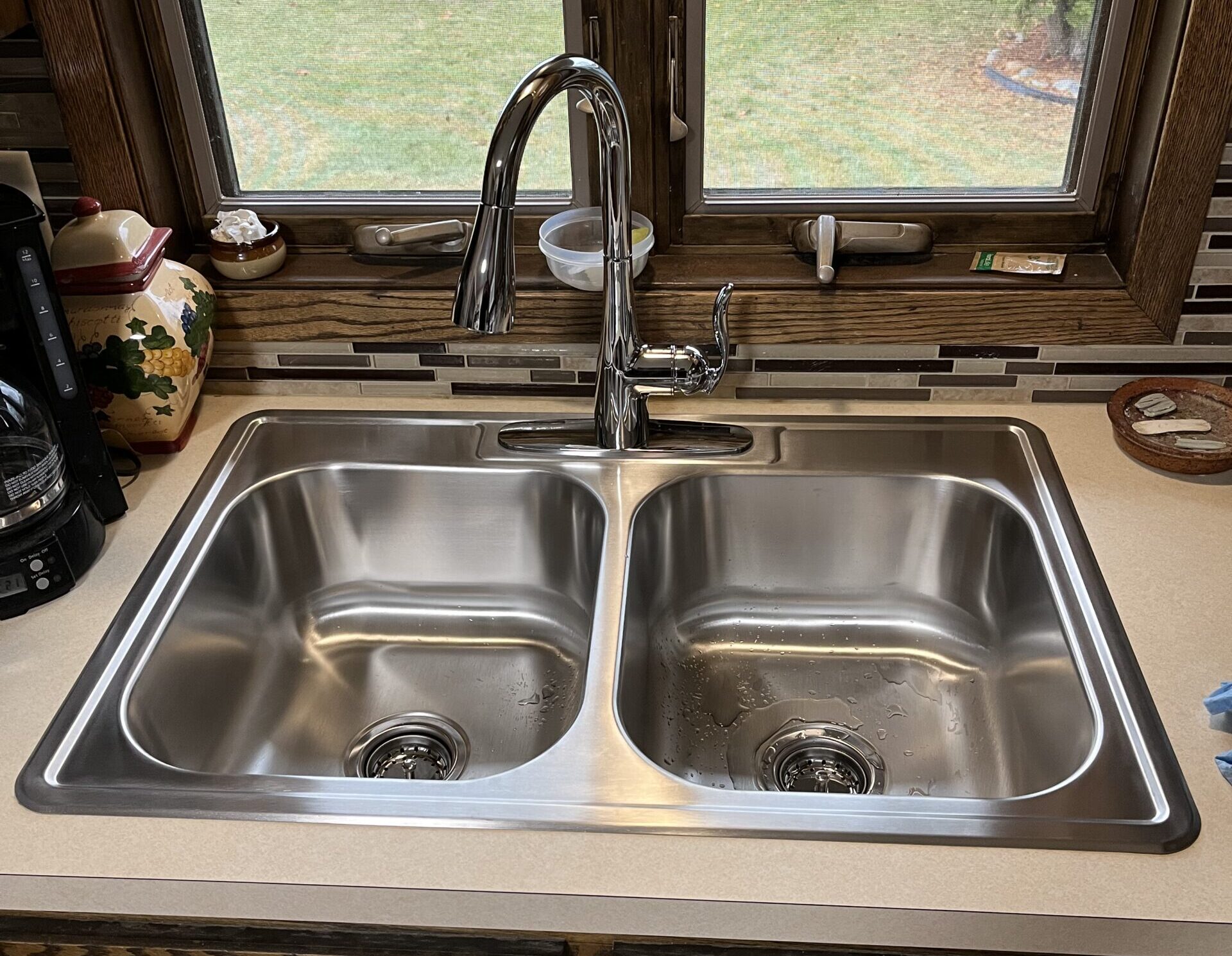
If you have a double-basin kitchen sink, water appearing in the opposite basin is an important clue.
The two sinks typically share part of the same drainage system. When a blockage occurs beyond the point where the drains connect, water may have nowhere else to go and can move into the other basin.
That usually indicates a drain problem rather than a problem with the sink basin itself.
Your dishwasher also interacts with your kitchen plumbing.
If the sink fills with water when the dishwasher drains, something may be preventing wastewater from moving through the system correctly.
The problem could involve the kitchen drain, garbage disposal connection, dishwasher drain setup, or another restriction.
Rather than assuming the dishwasher itself has failed, have the drainage system evaluated.
A bottle of drain cleaner is tempting when you want the sink working immediately.
However, chemical products aren’t guaranteed to remove the actual obstruction. Depending on the type of blockage and plumbing system, they may provide little more than a temporary improvement.
Repeated drain problems usually deserve further investigation.
A professional plumber can determine where the blockage is located and select an appropriate method to clear it.
A minor drainage problem doesn’t always require emergency service. But some symptoms indicate that professional attention is a good idea.
Consider calling a plumber when:
These symptoms provide clues about whether you’re dealing with a simple localized clog or a larger plumbing issue.
A kitchen plumber can also help with other plumbing fixtures and connections.
Kitchen plumbing services may include faucets, sinks, supply lines, shutoff valves, garbage disposal connections, dishwasher plumbing, and other water or drainage components.
If you’re remodeling your kitchen, involving a plumber early can also help ensure new fixtures and appliances are properly connected.
A clogged kitchen sink is inconvenient, but repeatedly clearing the same blockage without finding the cause can be even more frustrating.
Pay attention to early symptoms such as slow drainage, gurgling, odors, and water appearing in the opposite basin.
If your kitchen plumbing isn’t operating correctly, LaHaye Plumbing can diagnose drain, fixture, and plumbing problems and help determine the appropriate repair.
Contact LaHaye Plumbing when your kitchen sink, faucet, drain, garbage disposal connection, or other kitchen plumbing needs professional attention.
Lahaye Plumbing: 7 Signs Your Water Heater May Need Repair or Replacement Most homeowners don’t think much about their water heater until
Lahaye Plumbing: Why Is My Water Pressure Low? Low water pressure can turn simple everyday tasks into a hassle. Maybe your shower